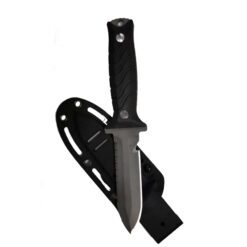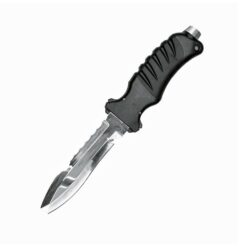


Aqualung Argonaut Titanium Dive knife
Choose the cutting tool and sheath
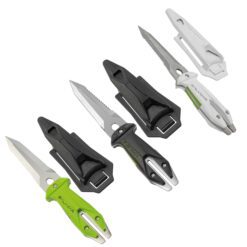
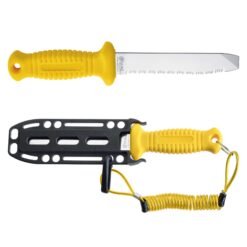
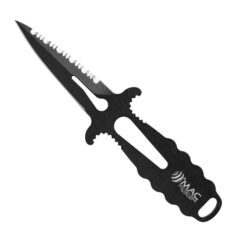
Compare the Argonaut’s chisel tip with drop-point knives and compact line cutters.

Choose a dive knife or line cutter by the cutting task, blade design and where you can reach it on your equipment. Compare titanium and stainless steel knives, compact cutters, sheaths and mounting parts.
Compare the Argonaut’s chisel tip with drop-point knives and compact line cutters.

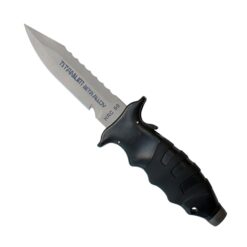
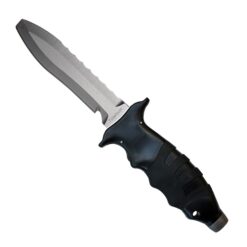
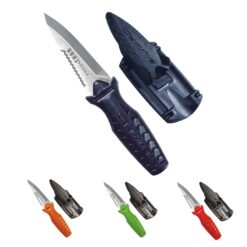
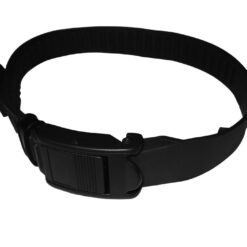
Check the FK940’s sheath release, supplied straps and access with your dive gloves.

The Borg has a stainless steel blade. Rinse, dry and inspect the knife and sheath after use.
Start with what you need to cut, then compare the blade and handle. A compact line cutter and a full-size dive knife are different tools. Check the listed cutting edge and intended use rather than choosing by blade length alone.
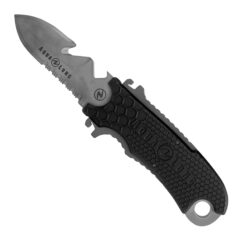
For a compact alternative, compare the Cressi Line Cutter and HQ Diving Dual Safety Line Cutter. Check the blade, holder and mounting details on the exact listing.
A knife is only useful if you can reach and release it. Compare the sheath lock, grip and mounting position with your usual gloves and equipment.
The Argonaut, FK940 and Borg use different sheath designs. Compare the release action as well as the blade before deciding.
Titanium and stainless steel still need care after salt-water use. Rinse the blade, handle, sheath and straps with fresh water, then dry them fully before storage.
Check the cutting edge, sheath lock and mounting parts for wear or damage. Clear sand and salt from the retention mechanism so you can check that it works properly.
Follow the exact model’s instructions for cleaning, lubrication, sharpening and any disassembly. The FK940 can be taken apart for cleaning; use its instructions rather than applying that procedure to every knife.
Store the tool as directed, with the edge protected. Need help comparing models or mounting parts? Ask our Hallam team, or browse the wider Dive Gear range.