
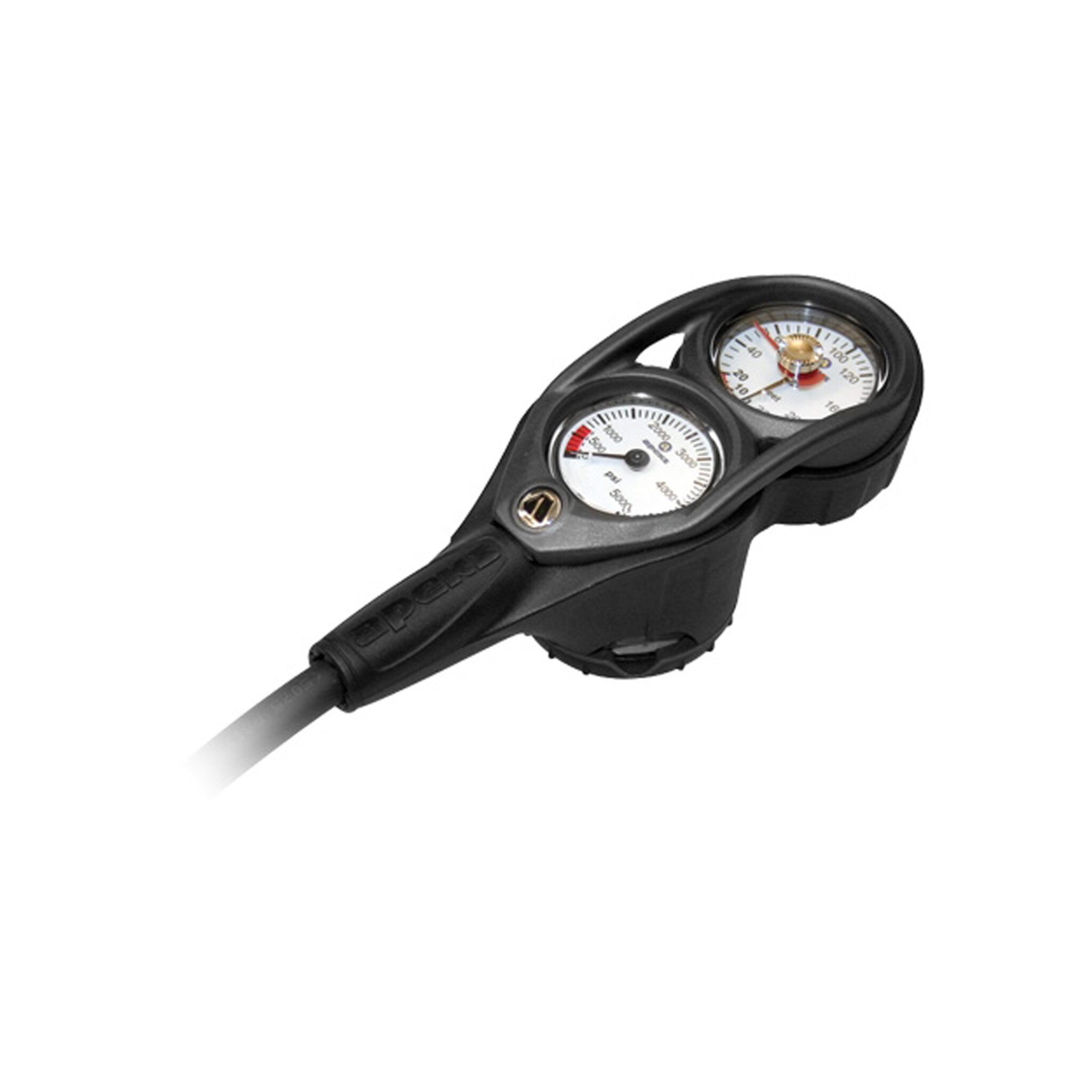


Apeks 3 Gauge Console
Original price was: $590.00.$560.00Current price is: $560.00. inc. GST
Apeks analogue three-gauge console with pressure and depth on the front and a compass on the reverse. Luminous displays, a resettable maximum-depth marker and two attachment areas aid practical use.
SKU: NS135119
1 in stock
- Description
- Technical Specs
- Shipping
- Returns & Exchanges
- Click & Collect
- Frequently Asked Questions
- Reviews (0)
Apeks 3 Gauge Console
The Apeks 3 Gauge Console brings cylinder pressure, depth and navigation into one analogue assembly. Pressure and depth are on the front, with the compass on the reverse, giving you a practical way to group three dive references together.
Features and benefits
- Pressure and depth at a glance. The paired front dials make it easy to check gas and depth when you bring the console into view. Their phosphorescent faces remain visible after light exposure.
- Maximum-depth memory. A resettable marker records the deepest point reached, useful for reviewing the dive. Reset it as instructed before the next dive.
- Compass for comfortable viewing. The luminous compass has a ratcheting bezel and side windows, letting you set a reference bearing and choose a convenient viewing angle.
- Protected instrument construction. The nickel-plated brass pressure-gauge housing and anti-splinter polycarbonate window protect the instrument during normal use.
- Two attachment areas. The integrated retaining points let you secure the console in a position that is easy to reach while keeping it from trailing beneath you.
- Overpressure protection. The gauge housing incorporates an overpressure capsule; leave its relief path unobstructed.
Setup and compatibility
Have the HP connection fitted and leak-checked on a compatible regulator. The pressure and depth scale limits are measurement ranges, not permission to exceed the equipment’s ratings or your dive plan. Use suitable timing and decompression planning, and keep magnetic or metal objects away when checking a compass bearing.
The pressure gauge uses oxygen-compatible materials, but this standard version is not supplied oxygen-clean. Use only gases approved for the complete configured system and have any oxygen-service requirements assessed by an appropriately qualified technician.
Care, rinsing and storage
After each dive, rinse the gauge and hose thoroughly with fresh water. Keep the complete regulator assembled, connected to a secured dive cylinder and pressurised while washing and rinsing, with the stages, gauge and connected hoses submerged. This helps keep water out of the pressure system. Lift the equipment out and dry the cylinder connection before depressurising and disconnecting; fit the first stage’s clean, dry dust cap.
Let the equipment dry in the shade, then store it with the hose in a relaxed curve. Protect the instrument from impacts and avoid lifting the regulator or cylinder by the gauge hose. Before diving, inspect the lens, hose and fittings, check for leaks and confirm that the needle responds normally and returns to zero when fully depressurised. Have damage, internal moisture or an unreliable reading checked by an authorised technician.
Technical Specs
| Brand | Apeks Dive Gear |
|---|---|
| Main model / configuration | Apeks 3 Gauge Console |
| Product type | Gauge |
| Pressure scale | 0–360 bar |
| Materials | Nickel-plated brass |
| Lens / screen glass | Anti-splinter polycarbonate |
| Dial | Phosphorescent gauge dials and luminous compass |
| Gauge type | Three-instrument analogue console |
| Oxygen compatibility | Oxygen-compatible materials; not supplied oxygen-clean |
| Depth-gauge scale | 0–70 m |
| Analogue compass included | Yes |
Additional specifications
| Layout | Pressure and depth on the front; compass on the reverse |
|---|---|
| Maximum-depth indicator | Resettable |
| Compass | Ratcheting bezel with side viewing windows |
| Attachment | Two integrated attachment areas |
| Pressure relief | Overpressure capsule |
Based on Apeks Dive Gear product information.
In-stock orders placed before 12 noon Melbourne time on weekdays are usually dispatched the same day once payment is confirmed. This excludes public holidays, pre-orders, backorders, special orders and custom orders. Dispatch times can vary. Delivery time depends on the carrier and your location.
Standard mainland Australian shipping is $20. Click & Collect from our Hallam store is free once your order is ready.
- Large or bulky gear: additional freight charges apply on top of standard shipping: large dive bags $30; long freediving fins $15; long spearguns $20. Scuba tank freight is shown at checkout.
- Rural, remote & offshore: rural means anywhere outside metropolitan areas. Carrier availability and additional charges may apply, including for island and territory destinations. Our team will contact you if an extra freight quote is needed.
The available delivery rate for your order is shown at checkout.
Need your gear urgently? You are welcome to arrange your own same-day courier or Uber pickup from Hallam. Call 03 9702 3694 before booking so we can confirm payment, that your order is packed and ready, and a collection time. Tell us who will collect and give your driver the order number. You arrange and pay the courier directly; delivery timing depends on the provider.
Contact us within 30 days of delivery to request a refund, exchange or optional store credit on eligible unused goods within Australia. Refunds go to the original payment method. Keep goods clean and undamaged with tags, original packaging and all accessories. No restocking fee applies to eligible returns meeting these conditions.
For change-of-mind returns and size exchanges, you pay return postage and replacement shipping. Original delivery charges are not refunded. Water-tested goods, clearly marked clearance items and genuinely custom-made or personalised items are excluded from change-of-mind returns. Ordinary discounted goods remain eligible.
For product problems, please call 03 9702 3694 before returning an item so we can help and explain the next steps.
Still unsure which size to choose?
Call our experienced dive instructors on 03 9702 3694 before ordering. Have your measurements and preferred product ready so we can help you choose the most suitable size. Fit varies between brands and models.
FREE CLICK & COLLECT
Usually ready same day*
Select local pickup at checkout. We will email you when your order is ready. Please wait for your ready-to-collect confirmation before visiting, then bring your confirmation email and photo ID.
Need your gear urgently? You can arrange your own same-day courier or Uber pickup. Call 03 9702 3694 before booking so we can confirm payment, that your order is packed and ready, and a collection time. Tell us who will collect and give your driver the order number. You arrange and pay the courier directly; delivery timing depends on the provider.
Collect from our Hallam store
Factory 4 / 56–60 Hallam South Rd
Hallam VIC 3803
*For items in stock at our Hallam store during opening hours, subject to order processing. Available-to-order and special-order items take longer. Collection is unavailable while the store is closed.
Can I collect my order from the store?
Yes. Choose free local pickup at checkout and wait for your ready-to-collect email before visiting our Hallam store. Bring your confirmation and photo ID. See Click & Collect details.
How do I choose the right size?
Use the product's size chart where available and compare your measurements with the guide for that brand. Sizing varies between brands and products. Still unsure? Call our experienced dive instructors on 03 9702 3694 during business hours before ordering. Have your measurements and preferred product ready. For fins and boots, tell us which socks or dive boots you will wear.
How do I check availability?
Select your required options, such as colour and size, to see availability for that variation. “Available to order” means the item may need to be sourced before dispatch. Call 03 9702 3694 to check the current lead time before ordering, especially if you need your gear for a trip or a particular date.
When will my order be dispatched?
In-stock orders placed before 12 noon Melbourne time on weekdays are usually dispatched the same day once payment is confirmed. This excludes public holidays, pre-orders, backorders, special orders and custom orders. Dispatch times can vary. Delivery time is separate from dispatch time and depends on your location and the carrier. Read our shipping information.
Can I exchange an item if it does not fit?
Contact us within 30 days of delivery to request a refund to the original payment method, exchange or optional store credit on eligible unused goods. You pay change-of-mind return postage and replacement shipping; original delivery charges are not refunded. No restocking fee applies to eligible returns. Clearance and genuinely custom-made items are excluded from change-of-mind returns. Read the return conditions and next steps.
Can you help me choose the right gear?
Yes. Call 03 9702 3694 during store hours or email [email protected]. Tell us which product you are considering and how you plan to use it.
Only logged in customers who have purchased this product may leave a review.
Similar products
View all Gauges





Reviews
There are no reviews yet.